Potato Field
1944
The air gangsters came one afternoon the previous autumn. Marguerite was in the field filching her own potatoes from the Reich — the demands of the food service inspectors ever more unreasonable.
‘Look,’ she said to Max. ‘A Napoleon beetle.’ Her left hand pointed out the beetle, her right pocketed a potato.
‘Why are you speaking the Platt?’ he said. She would have liked to shake him. The Platt was the language of his people, the language that predated the border, that predated both France and Germany.
She said: ‘Silly me.’
‘You often forget,’ he said. ‘Did you know Napoleon was an Aryan?’
‘Was he?’
Marguerite rubbed the dirt from her fingers. How much blood had fertilised this soil over the centuries? The Celts were said to be the first to chip coal out of the earth here to fuel the fires and forge their weapons. The Romans did the same, heated their baths with it. After that, the land had been tossed between barons and lords, dukes, princes and bishops — some Germanic, some Frankish. Louis the Sun King had his time here, and Napoleon Bonaparte and the fledgling French Republic long before the nation of Germany was dreamed of. The border lifts, the border shifts. What could the people who live here do, but hold on, and work, worship and endure?
Max had learned none of this. His hand was raised, his eyes searching the sky.
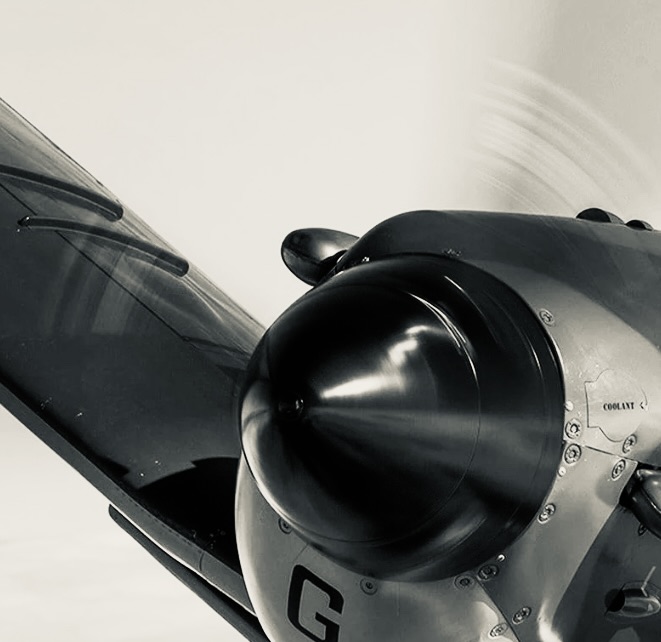
‘There,’ he said. ‘Mosquitos.’ This was what they learned in school now. Aircraft identification. Target practice. Wrestling. She followed the line of his raised arm to where three silver beasts were bearing down.
She launched herself up. Potatoes tumbled from her apron in a veil of black dirt. She would go back for them. Her thoughts were dandelion seeds. Her feet had sprouted roots. A drawing of breath. Was it hers? A shout. Her heart was the only thing moving, a trapped bird in her chest. Her ears filled with the howl of an aircraft in a steep dive. They were in an open field. Mice in a box.
Ahead, directly below the three incoming planes, was the shelter of the wood. No good. Breathe out. Left. More fields. Why waste time looking? She knew this. To her right: the line of houses along the Lauterbach Strasse, and hope: the stairs to the mine under Willi Köhl’s property. But long green rows of potato mounds warped and stretched before her, the houses shrank and pulled away. Too far. Breathe in.
Was there shelter behind? The planes were dropping in low, already clearing the forest. In one ferocious movement, she spun, took hold of Max’s arm, and ran. A line of gnarled fruit trees stood on the north boundary. There was strength in those ancient trunks, but they were thirty metres away. Could they make it? But Max had stopped, was looking back. One of the aircraft was dropping out of the sky toward them. What was this new sound? A metallic crack. Machine gun fire. What demons were these to fire on a mother and child in a field? What hellish, diabolical demons?
She dragged at Max’s arm, her cry lost under the scream and vibration of the planes. They leapt and stumbled, toes catching on tubers and clods of earth, tearing apart the neat furrows and packed-up ridges formed with such care in summer. How many steps to the trees? Her hand was a vice and she would get him there even if it made her heart stop. She risked a glance back. The field was erupting behind them into geysers of black and green. Her foot caught in a tangle of vines and her right hand, the hand that gripped her child, her only son, flared to break her fall. As if he were nothing.
The earth came up to meet her; soil and stones and vines dragged through her ear, her cheek and hair. Blinded by earth, deafened by the squall of the bomber and its murderous gunfire and her child lost from her grasp, Marguerite felt her strength fall away. She would rest here in the embrace of the earth.
Her arm was gripped and she was up again, this time with Max leading. Too late. Too late. The fighter was on them, cannons raining fire and throwing up curtains of dark earth. Hot blows buffeted her back, and she was shoved into the ground in the deep shadow of a fruiting plum tree, her child on her back. The smell of hot metal, the taste of blood. She waited for death.
Max was alive. This was her first thought. She could hear him retching and coughing even through the ringing in her ears. The chatter had ceased; the aircraft was already a distant hum. Marguerite rose to her knees, gasping at the pain between her shoulder blades. Her eyes, her nose and throat were full of dirt.
‘Max?’ She spat soil back into the field.
‘I’m all right, but I can’t see.’
She pulled up the underside of her apron —weightless now, without the potatoes — and cleared the dirt from her own eyes. There he was, on hands and knees. She crawled over and ran her hands over his head, his neck, his back and sides. Intact. She pulled a vine from his hair, sat back on her heels and examined her own arms, filthy yes, but not dripping blood as she had imagined.
An itch at the rear of her mind elbowed its way forward and she puzzled at it, reaching through the haze.
Anna.
Marguerite ran, lifting an arm at the gaping neighbours. Through the field and apple trees, past the chicken coop and rabbit hutch, the empty pigpen, through the wooden gate, past the rows of onions and carrots and beans. She took the steps two at a time, startling a trio of sparrows in the flower pots, hauled open the open, kicked off her boots and stepped into the house. The kitchen clock clanked out the seconds. Outside, the sparrows squawked a protest. Her insides pulled into a hard knot.
Again, she called, and ran upstairs. Anna was curled up like a kitten next to the window.
‘Anna?’
Her daughter opened her eyes and blinked. She leaned forward and vomited on the rug, frowning at the small puddle of precious oats. Marguerite took a step forward, but was reluctant to soil Anna’s clean grey dress.
‘I will get a bucket.’ Marguerite knelt a little closer. ‘Anna? I am going to fetch a bucket.’ Max had followed her in and stood there, uncertain.
‘Stay with her,’ she said to him.
‘I heard you die.’
Marguerite stopped. Anna was on her feet; her whole body quaking. ‘I was watching from the window when it started. Then I closed my eyes and I thought: “Now they are gone. I am all alone”.’
Max reached Anna first, dropping with her to his knees, gripping her in his dusty arms and whispering: ‘We’re here, Anna. We are here. You are not alone.’ Anna was panting like a lamb, her knuckles white where she gripped her brother’s arms. Marguerite encircled them, dirtying Anna’s dress after all, and the three of them sat, ignoring the puddle of sick, and the neighbours’ worried voices calling up from the kitchen. Was there ever a time when she was not afraid? She could for her life remember it.
Subscribe
Enter your email if you’d like to read more.
.
 KJ HOLDOM